StatefulSet volumeClaimTemplates
Every replica of a StatefulSet gets a disk of its own and, once recreated, finds the same data on it again. How does each Pod find its own claim among the rest, and what stays behind when you scale down?
Play the animation 5 steps, animated, plays on a computer or a tablet
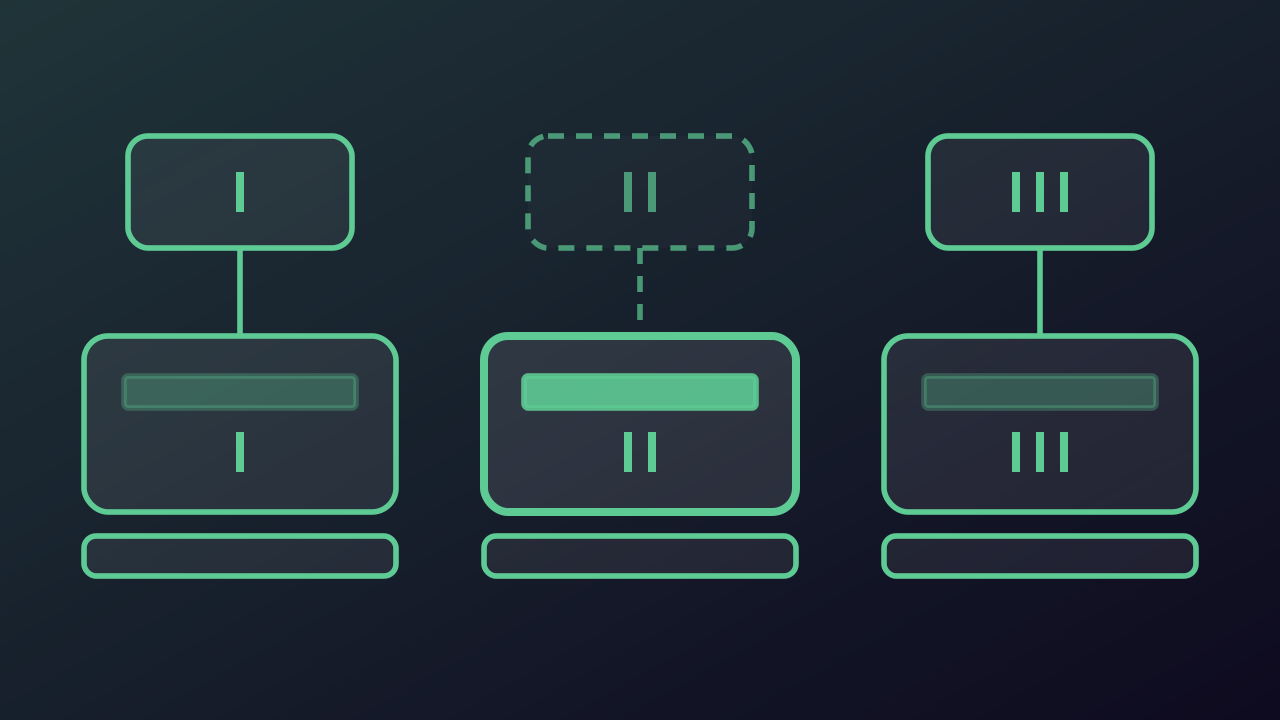
StatefulSet volumeClaimTemplates, step by step
-
For each ordinal the StatefulSet creates the claim, or reuses one of that name, and then its Pod. The claim name is the template name joined to the Pod name: data-web-0, data-web-1, data-web-2. Drawn as one pass, but under the default OrderedReady policy web-1 waits until web-0 is Running and Ready.
Play from step 1 -
Each claim is bound to its own PersistentVolume, ordinal 0 to PV web-0 and never to PV web-1. Drawn as one phase, but by default each ordinal binds and mounts before the next is created, so a claim stuck Pending stalls every later one. The claim is the durable name, the disk holds the bytes.
Play from step 2 -
Each Pod mounts the volume behind its own claim before its app starts. Replica web-0 reads and writes data-web-0, web-1 data-web-1, and so on. Each replica names a different claim and a claim binds exactly one PV, so no two replicas share a disk.
Play from step 3 -
When web-1 is deleted, the StatefulSet recreates it, possibly on another Node that can reach PV web-1. The claim data-web-1 is not deleted with the Pod and stays Bound to PV web-1. The new Pod derives the same claim name from its ordinal, so it mounts the same disk and data.
Play from step 4 -
When web is scaled down to two, Pod web-2 is removed, but claim data-web-2 stays Bound with its data. That is the default whenScaled policy, Retain, which the StatefulSet PVC Retention card covers. Scaled back up, web-2 reuses the same claim, but a scale-down nobody cleans up leaves disks behind.
Play from step 5